
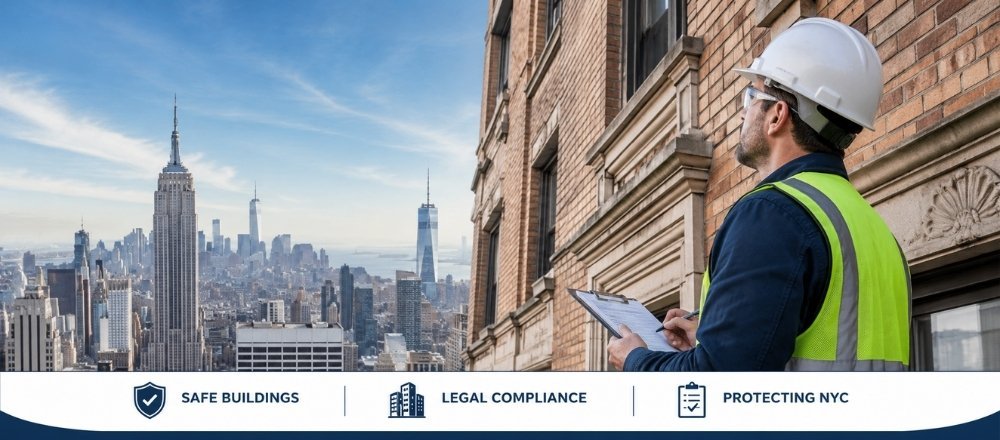
Rent collection isn’t the only concern for NYC property owners. Building owners are also required by law to maintain the safety of their buildings. Local Law 11 applies to owners of buildings that are at least six stories tall. Noncompliance can lead to costly emergency repairs and safety issues. Law knowledge is the best type of knowledge.
The Facade Inspection and Safety Program (FISP) is New York City’s Local Law 11. This law requires the building owner to have their building’s facade inspected every five years. The goal of the law is to ensure safety by preventing hazardous conditions that could threaten the safety of the building’s occupants and the general public.
The integrity and safety of a building’s exterior and its structural components are assessed by a qualified professional.
Local Law 11 was introduced after falling facade materials resulted in serious injuries and fatalities. The law aims to prevent these accidents through routine inspections and timely repairs.
Regular assessments will help in identifying any damage due to the elements, aging, etc. By addressing problems early, property owners can protect public safety while preserving the value of their buildings.
Property owners will always be liable for the law, but in most cases it is the property managers who actually organize the inspections and repairs.
Inspections must be performed every five years by a Qualified Exterior Wall Inspector (QEWI), typically a licensed architect or engineer.
The inspection involves both close-up examinations and visual reviews of exterior components. Inspectors look for cracks, loose materials, water damage, and other defects that may compromise safety.
Building owners can face several punishments after breaking Local Law 11, such as being fined and cited, as well as facing other actions the city implements. Choosing to delay making repairs can cause repairs to become more costly and can create even more problems. If something were to happen to someone due to the negligent and unsafe condition, they would face legal issues.
It is very common for owners to realize that it is less expensive to proactively solve the smaller issues instead of having to address the issues with emergency repairs.
The size and complexity of the building determine how long the building inspection will take. Smaller buildings may take a few hours, whereas larger buildings may take several days. The inspection will have to be done before the QEWI can submit the completed report.
Property owners in NYC benefit from the knowledge provided in Understanding Local Law 11 Explained. This knowledge allows owners to remain ahead of the requirements for compliance. Regular inspections of the facades of buildings are necessary to ensure the safety of the public, as well as to protect the value of the building and to avoid unnecessary financial hardships. When property owners take the time to plan for inspections and work with capable and experienced professionals like Brick Pointing Queens, the process becomes a lot easier for everyone.